By clicking “Accept All Cookies”, you agree to the storing of cookies on your device to enhance site navigation, analyze site usage, and assist in our marketing efforts. View our Privacy Policy for more information.
Want Stronger, Pain-Free Shoulders? Start Here
Struggling with shoulder pain or slow progress? Discover our go-to drill that reduces discomfort, improves movement and helps you train pain-free again.
By
March 30, 2026


Our Go to Drill for Shoulder Health:
In a perfect world, we would never get niggling injuries or aches and pains that slow our training or progress down. The next best thing would be to hedge our bets and prepare (I like to call it bullet-proofing) certain areas of the body so that they can handle all the demands of training, allowing us to progressively increase our capacity to do more work.
This is why at Feel Good Health and Performance, we created the injury cheat sheets in the open room. Last week one of the members asked a really important question - Simply, “Why”? Without understanding the why behind something, there’s a fair chance that the buy in, isn’t as great, so I wanted to touch on the why behind one of the cheat sheet exercises (Lock Lat Pull).
The reason we like the Lock Lat Pull is two fold:
● It’s a great primer for any lat / pulling exercise (think pull ups, rows, rope climbs) helping to reduce the stress on our elbow / forearm (which means less chance of getting any golfers elbow discomfort).
● It has the ability to create more space inside the shoulder joint for the respective tendons to slide past each other and the bursa. The most common pathology I see on shoulder imaging reports is bursitis and / or supraspinatus. Both issues can cause considerable discomfort and arise when the sub-acromial space is constricted (fancy word for the area in between the shoulder and shoulder blade).
When the lats are strong or primed - aka via doing a couple of warm up sets of the Lock Lat Pull, the lats are able to depress the top of the shoulder, effectively gaping / increasing the sub-acromial space - which takes pressure off the supraspinatus tendon (allowing more blood flow = increased healing potential) and the bursa.
Technique always comes first at FGHP and the execution of this is no different. To maximise the benefits, there are a couple of key points-
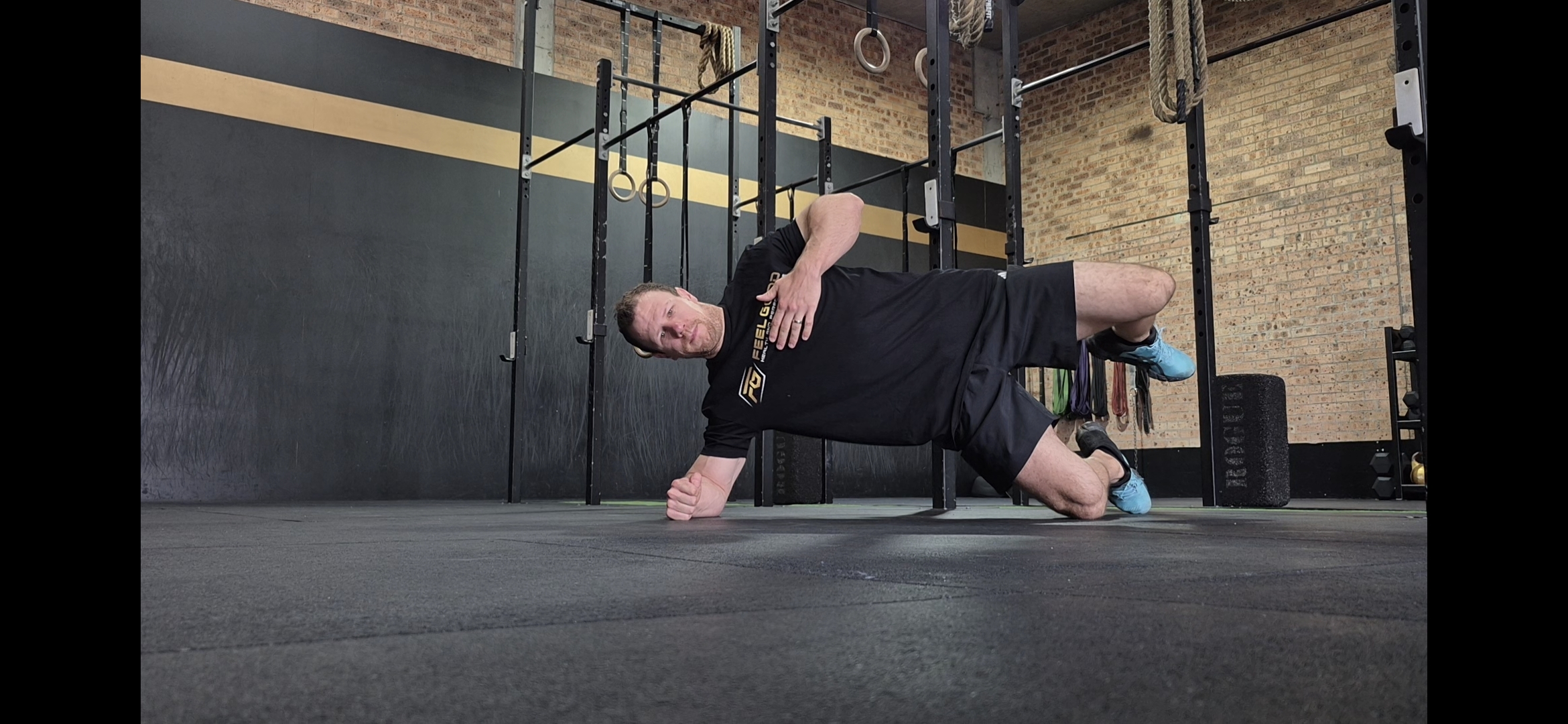
● Use a neutral grip (aka position your hand like you’re about to shake hands). A lot of people will want to use an underhand grip (because they feel stronger), but this just increases the stimulus to the biceps.
● The high to low row / pull is performed with a subtle side bend (not a twist or rotation of the torso). This is important because of how the Lats attach down onto our lower back. They have no ability to affect/perform rotation, but they do produce a side bend/lateral flexion.
● Finally your shoulder needs to finish behind your collar bone. This will ensure the appropriate scapula positioning- aka you’ll be able to feel a good lat contraction/squeeze.




.png)
.jpg)
.jpg)

.jpg)
.jpg)
.jpg)
.png)
.png)
(1)(1)(1).jpg)

.jpg)
.jpg)
.png)
(1).jpg)
.jpg)